Expert Guidance
Installation & Lawn Care
Everything you need to know to install, establish, and maintain a beautiful lawn in Southern Utah's desert climate.
Sod Installation Guide
Follow these steps for a successful sod installation. Proper preparation is the key to a lawn that thrives.
Prepare the Soil
Remove all existing vegetation, rocks, and debris. Grade the area so it slopes away from buildings for drainage. Rake the soil smooth and level.
Apply Fertilizer
Spread our SoilSmart or GrowSmart fertilizer evenly across the prepared soil before laying sod. This gives your new grass the nutrients it needs to establish roots quickly.
Lay the Sod
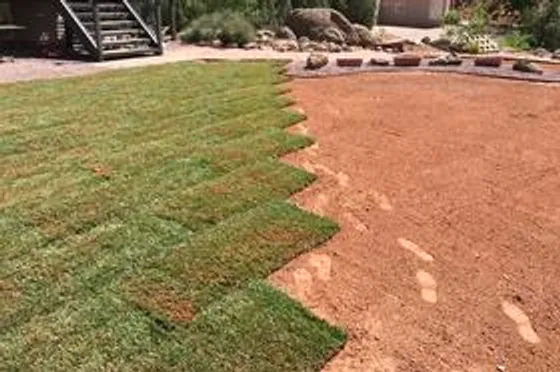
Start along a straight edge like a driveway or walkway. Lay rolls end-to-end, staggering seams like bricks. Press edges together snugly without overlapping. Use a sod knife ($5) to trim around obstacles.
Roll and Water
Roll the newly laid sod to eliminate air pockets and ensure good soil contact. Water thoroughly immediately after installation. The soil beneath should be moist to a depth of 3-4 inches.
Establish a Watering Schedule
Water 2-3 times daily for the first two weeks to keep sod moist. Gradually reduce to once daily, then every other day. After 3-4 weeks, transition to a deep, infrequent watering schedule. Adjust your timer box for the current season.
Seeding Guide
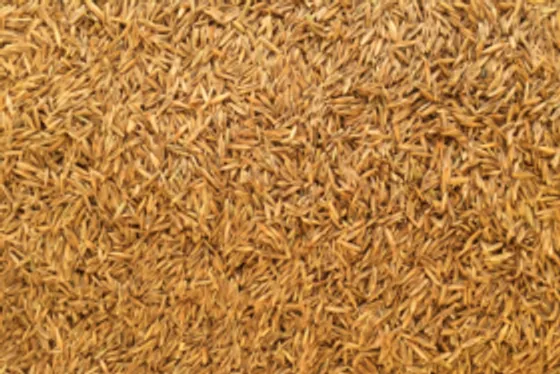
For overseeding thin areas or starting from seed, follow these tips for the best results with our sod-quality grass seed.
Best Time to Seed
Early fall (September-October) is ideal in Southern Utah. Spring seeding (March-April) is a second option. Avoid seeding in the heat of summer.
Soil Preparation
Loosen the top 1-2 inches of soil. Apply a thin layer of compost or our SoilSmart fertilizer. Rake smooth and level.
Seed Application
Use a broadcast spreader for even coverage. Apply at the rate recommended on the bag. For overseeding, apply half the full rate. Lightly rake seed into soil.
Watering for Seed
Keep the seeded area consistently moist (not soaked) for 2-3 weeks until germination. Water lightly 2-3 times per day. Gradually reduce once grass reaches 2 inches.
First Mowing
Wait until new grass reaches 3-4 inches, then mow to 2.5-3 inches. Never remove more than one-third of the blade height in a single mowing.
Year-Round Lawn Maintenance
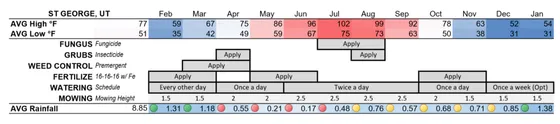
Southern Utah's desert climate requires a tailored approach. Follow this seasonal schedule to keep your lawn healthy and green.
Spring (March - May)
- •Apply GrowSmart fertilizer in early March
- •Begin mowing when grass reaches 3 inches
- •Adjust watering schedule as temperatures rise
- •Apply pre-emergent weed control if needed
- •Second fertilizer application in late May
Summer (June - August)
- •Water deeply in early morning to reduce evaporation
- •Mow higher (3-3.5 inches) to shade roots
- •Apply RootSmart fertilizer in mid-July
- •Watch for grub damage and treat if needed
- •Avoid mowing during peak heat
Fall (September - November)
- •Best time for overseeding thin areas
- •Apply GrowSmart fertilizer in September
- •Gradually reduce watering frequency
- •Continue mowing as needed
- •Aerate compacted areas
Winter (December - February)
- •Apply SoilSmart winterizer fertilizer
- •Reduce watering to 1-2 times per week
- •Keep off dormant grass when possible
- •Plan spring projects and order sod
- •Service sprinkler system and winterize
Troubleshooting Common Issues
If your lawn is struggling, here are the most common issues we see in Southern Utah and how to fix them.
Brown or yellow patches appearing
New sod edges drying out or curling
Sod not rooting after 3 weeks
Fungus or mushrooms appearing
Grass thinning or not growing back after mowing
Need Help With Your Lawn?
Our team is here to help. Call or text us for expert advice on installation, maintenance, or troubleshooting.
Call or Text 435.256.6421